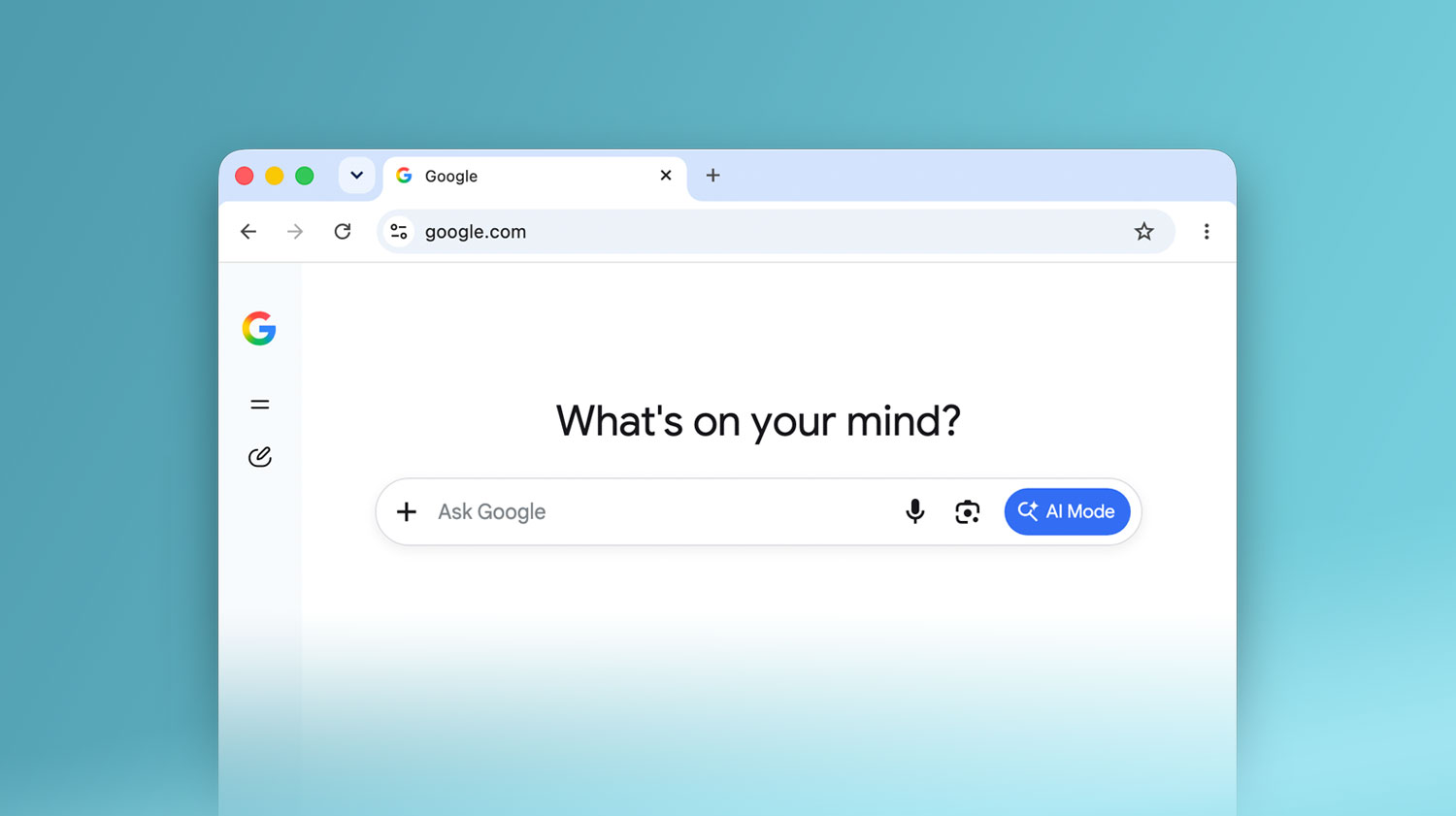
A growing number of your potential customers aren’t typing a search into Google and scrolling through ten blue links anymore. They’re asking ChatGPT, Claude, Perplexity or Google’s own AI features a direct question and getting a direct answer straight back.
Sometimes that answer names a specific business, and sometimes it doesn’t. Either way, the person asking often never clicks through to a website at all. This is already happening rather than something on the horizon, so it’s worth understanding what it means for your business now, rather than catching up once it’s already cost you a few enquiries.
What’s actually changing
The shift has already picked up a couple of names: generative engine optimisation, or GEO, and answer engine optimisation, or AEO. Strip the jargon away and the idea behind it is fairly simple. You want AI tools to understand what you do, recognise that you’re a useful and trustworthy source, and mention you when someone asks a question you could answer well.
None of this replaces the SEO work you’re probably already doing. It builds on many of the same foundations, so nothing you’ve put into your website so far has gone to waste. What shifts is the emphasis, more than anything else. Traditional search is largely about getting your pages discovered, understood and ranked. AI tools are also trying to work out which information is useful enough to include in an answer. That puts more emphasis on clarity, useful information, expertise and whether your content actually answers the question someone is asking.
1. Write your headings like real questions
A good starting point is writing your headings the way a customer would actually ask a question, rather than the way you’d naturally describe your own business. If someone’s likely to ask “how much does a new website cost?”, a heading that mirrors that phrasing does more of the work than one that simply says “Our pricing”. It helps to answer the question plainly in the first sentence or two underneath as well. Give people the answer quickly, then add the detail, examples and nuance afterwards. This works for people too. Nobody enjoys digging through half a page of marketing copy to find the answer to a simple question.
2. Get your basic details straight
The other thing worth sorting out is consistency. If your business name, address, phone number, opening hours or description are slightly different across your website, Google Business Profile and other directories, you’re making it harder for search engines and AI tools to build a clear picture of your business. It’s a fairly boring job, checking all of that, but it’s also one you can work through yourself in an afternoon without needing anyone’s help. Make sure the basics are right, consistent and up to date wherever your business appears online.
3. Think beyond your website
One of the biggest differences with AI search is that your website isn’t the only thing being considered. When someone asks an AI tool to recommend a business, it can draw on information from lots of different places, including your website, business listings, reviews, directories and other websites that mention you. That means your online presence needs to tell a consistent story wherever someone finds you. Your website might say you’re a web designer specialising in small businesses, but if your Google Business Profile, LinkedIn profile and directory listings describe you differently, you’re making it harder for an AI system to work out exactly what you do and who you do it for.
This is another reason why the basics matter. A clear website, accurate business listings, genuine reviews and useful content on other sites all contribute to the picture an AI tool builds of your business.
4. Get mentioned on other sites, not just your own
What an AI tool cites when it answers a question doesn’t necessarily come from a business’s own website. It can draw on other sites talking about that business instead. Reviews, your Google Business Profile, industry directories and local press or sector write-ups can all help build that wider picture.
Getting listed properly on the directories relevant to your industry, keeping your Google Business Profile filled in and up to date, and encouraging happy customers to leave a genuine review are all worthwhile things to do. You don’t need to try to get mentioned everywhere. A handful of relevant, credible places is much more useful than filling the internet with hundreds of meaningless directory listings.
5. Be specific about what you do
This sounds obvious, but it’s surprisingly easy for a business website to be vague about what the business actually does. Phrases like “creative digital solutions” or “helping businesses grow” might sound good, but they don’t give an AI tool much useful information.
Be specific. Say what you do, who you do it for and where you work. If you specialise in something, say so. If you work with a particular type of customer or industry, make that clear too. Think about the difference between “digital agency” and “web design and graphic design company based in Fareham, working with Hampshire businesses”. The second gives both a customer and an AI tool a much clearer idea of where you fit.
6. Give each real question its own clear answer
AI tools can struggle when useful information is scattered across a website rather than gathered somewhere clear. If the answer to a genuine customer question is split across three different pages, none of which fully answers it, that’s much harder to understand than one page that deals with the subject properly. It’s worth going through your site and asking, for each real question a customer might have, whether there’s one clear page that actually answers it.
That doesn’t mean creating 50 pages of thin content just to target different questions. One genuinely useful page that answers ten related questions is often more valuable than ten pages that say very little.
7. Use lists and tables where they actually earn their place
Structure helps too, but only when it earns its place. A numbered list works well for a genuine step-by-step process. A table is useful when you’re comparing two or three things side by side. Both make information easier to understand and easier to extract. What doesn’t help is turning every paragraph into a list out of habit. A page built entirely from bullet points can end up harder to follow than a few well-written paragraphs, for a reader and an AI tool alike. Write for people first, then use structure to make the important information clear.
8. Show your expertise, don’t just claim it
AI tools need some way of working out whether a source is useful and trustworthy, and vague claims of expertise don’t give them much to work with. A page that says a business has “years of experience” means far less than one that shows an actual example, a real project, a named person or a specific result.
Case studies are particularly useful here. Instead of saying you’re experienced in ecommerce, show the ecommerce project you’ve worked on. Instead of saying you understand a particular industry, demonstrate that knowledge by answering the questions people in that industry actually ask.
The more real, specific detail you can put on a page, rather than general claims anyone could make about their own business, the more useful information there is for both your customers and the systems trying to understand your business.
Don’t fall for GEO shortcuts
There’s already a lot of advice online suggesting that you can “optimise for ChatGPT” with a few pieces of schema, a special prompt or some clever technical trick. I’d be wary of anyone promising that. There isn’t a magic switch that makes an AI tool recommend your business. The same fundamentals that make a website useful and trustworthy for people and search engines still matter: clear information, useful content, a technically sound website, relevant authority and genuine evidence that you know what you’re talking about.
Google’s own guide to optimising for generative AI features makes much the same point. Its existing SEO fundamentals still apply rather than being replaced by a completely new set of rules.
You don’t need to start again
None of this means rebuilding your website from scratch or starting again. Most of it comes down to adjusting what’s already there and tidying up a few details outside it. Rewrite a few headings, tighten the answer at the top of a page, add some useful detail to an existing article and make sure your business information matches everywhere it appears online. Small, steady changes add up here far more than one big push ever would.
Want to see how you’re doing?
You don’t necessarily need an expensive SEO or GEO platform to get started.
Official guidance
Google’s own guidance on AI Overviews and AI Mode. It’s particularly useful if you’re wondering whether GEO replaces SEO. Spoiler: Google says it doesn’t.
What does OpenAI actually recommend?
Open AI’s guidance is to make your site accessible to OAI-SearchBots and provide useful, relevant information, but there is no guaranteed ranking formula. If you’re interested in the technical side, OpenAI’s guidance for publishers and developers is a useful place to start.
Tools to try
HubSpot has a free AI Search Grader that gives you a snapshot of how your business is represented across ChatGPT, Perplexity and Gemini. It’s a useful way of simply asking, “What does AI actually think about my business right now?”
If you want to go further, tools such as OtterlyAI can continuously track brand mentions and website citations across AI search platforms, allowing you to see which questions you’re appearing for, which pages are being cited and where competitors are appearing instead. That’s much more useful once you’re ready to actively monitor AI visibility rather than simply experiment with it.
When it’s worth going further
This is the accessible end of a much bigger subject, and it’s about as far as most small businesses need to take it for now. If you reach a point where you want to track exactly how often AI tools are mentioning you, see where competitors are being cited instead of you, or build a proper strategy around it, that’s specialist territory. It’s the kind of deeper work we point clients towards Koozai for, the same as we do with SEO.
For now, the honest advice is to start small. Pick your five most important pages. Rewrite the headings as real questions and answer them clearly near the top. Make sure your business details match everywhere they appear online, then look at the questions your customers actually ask and make sure your website answers them properly. That gives you a much better foundation for being understood by both traditional search and the new generation of AI search tools.
If you want a hand working out where to start, that’s exactly the kind of conversation we’re happy to have.